Stirling Castle

Even though we were staying in Stirling, Tiff and I debated whether or not to visit the castle. In the end we decided to take the beautiful walk from Castlecroft B&B to the Castle. I am glad we stopped, because Stirling Castle was probably favorite castle we visited.
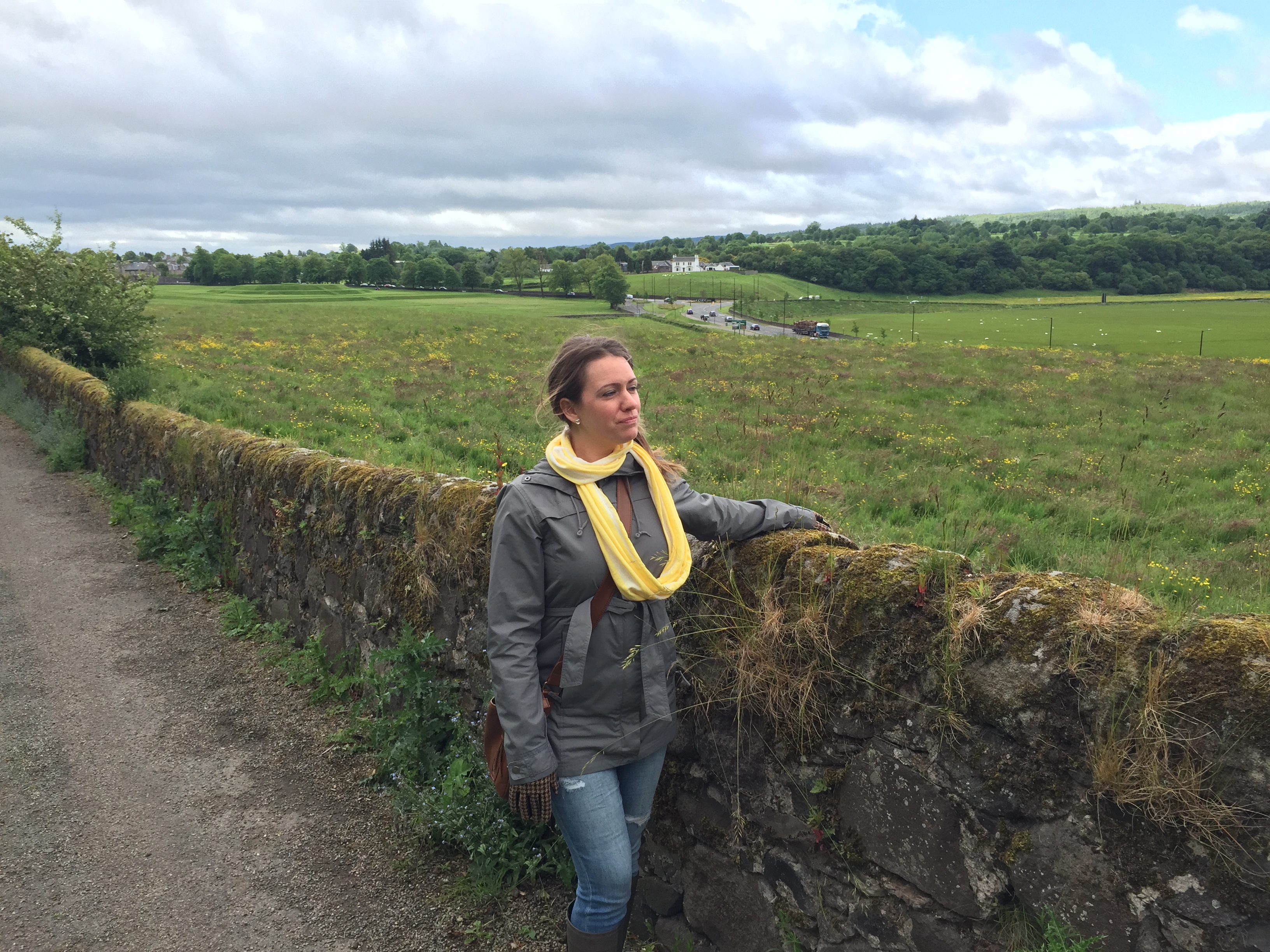
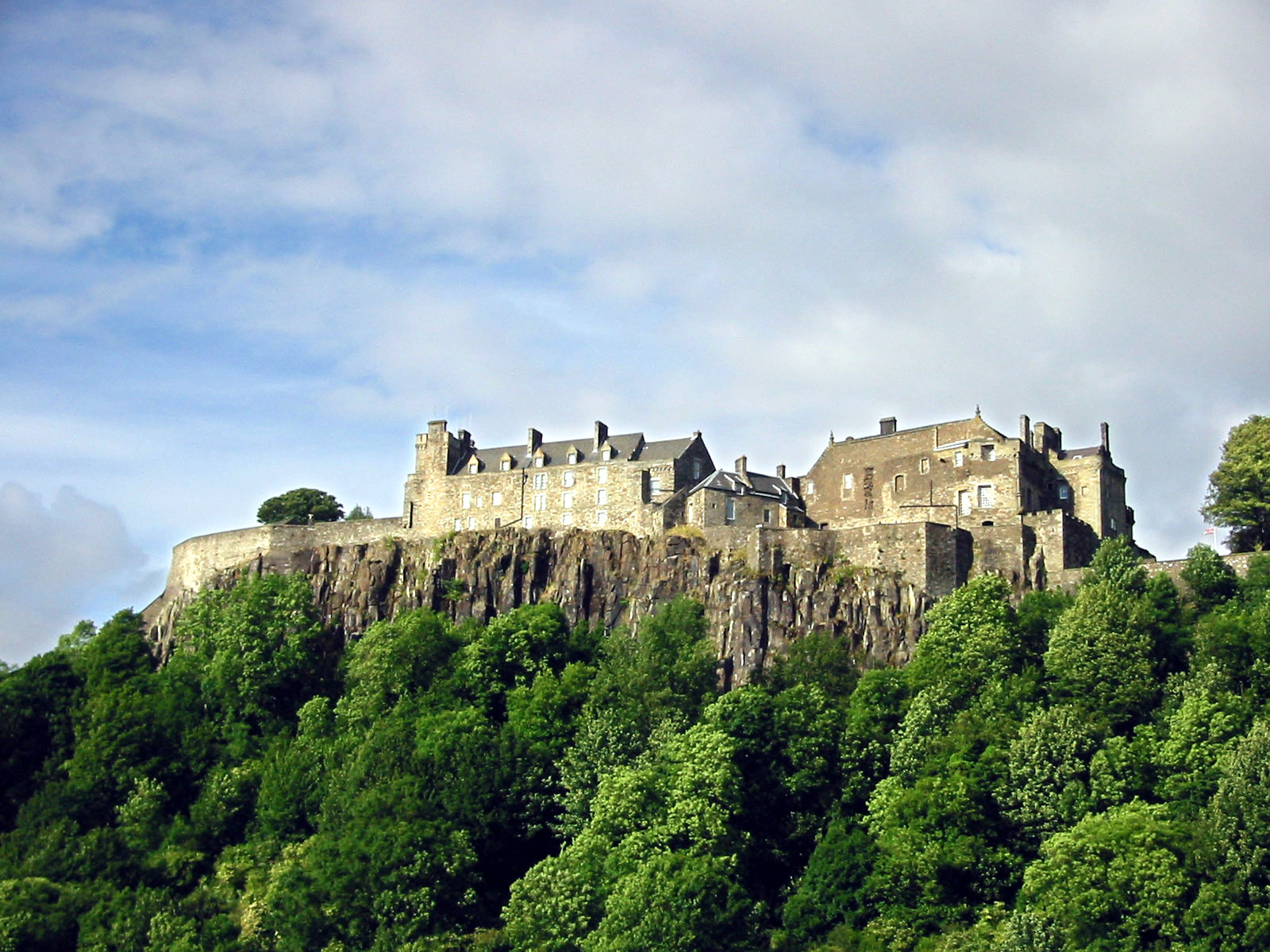
The first mention of Stirling Castle was in 1110 AD when Alexander I dedicated a chapel there. Stirling Castle was the Royal Castle of the Scottish kings and queens until the death of Alexander III in 1286.
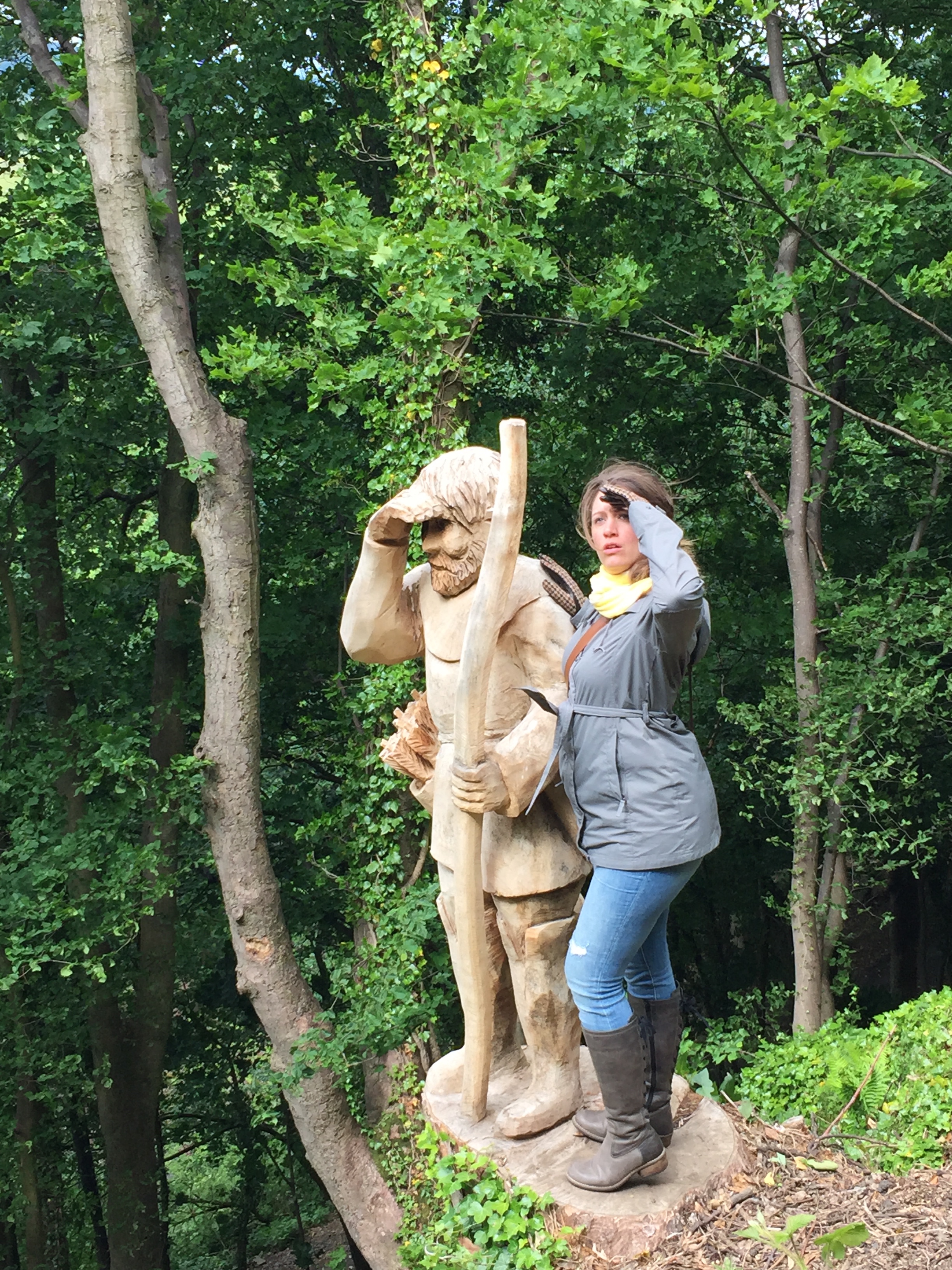
A year later King Edward I of England claimed Scotland to be under English rule. Ten years later, Edward invaded Scotland beginning the first war of Scottish Independence. In 1297, the Scots abandoned Stirling Castle in anticipation of the English.
Later that year, Andrew de Moray and William Wallace defeated the English at the Battle at Stirling Bridge. The interior of the castle has been renovated, and the staff is interactive. Several rooms in the royal suit had staff members dressed up in period pieces and answered questions and told stories about the rooms in the castle.
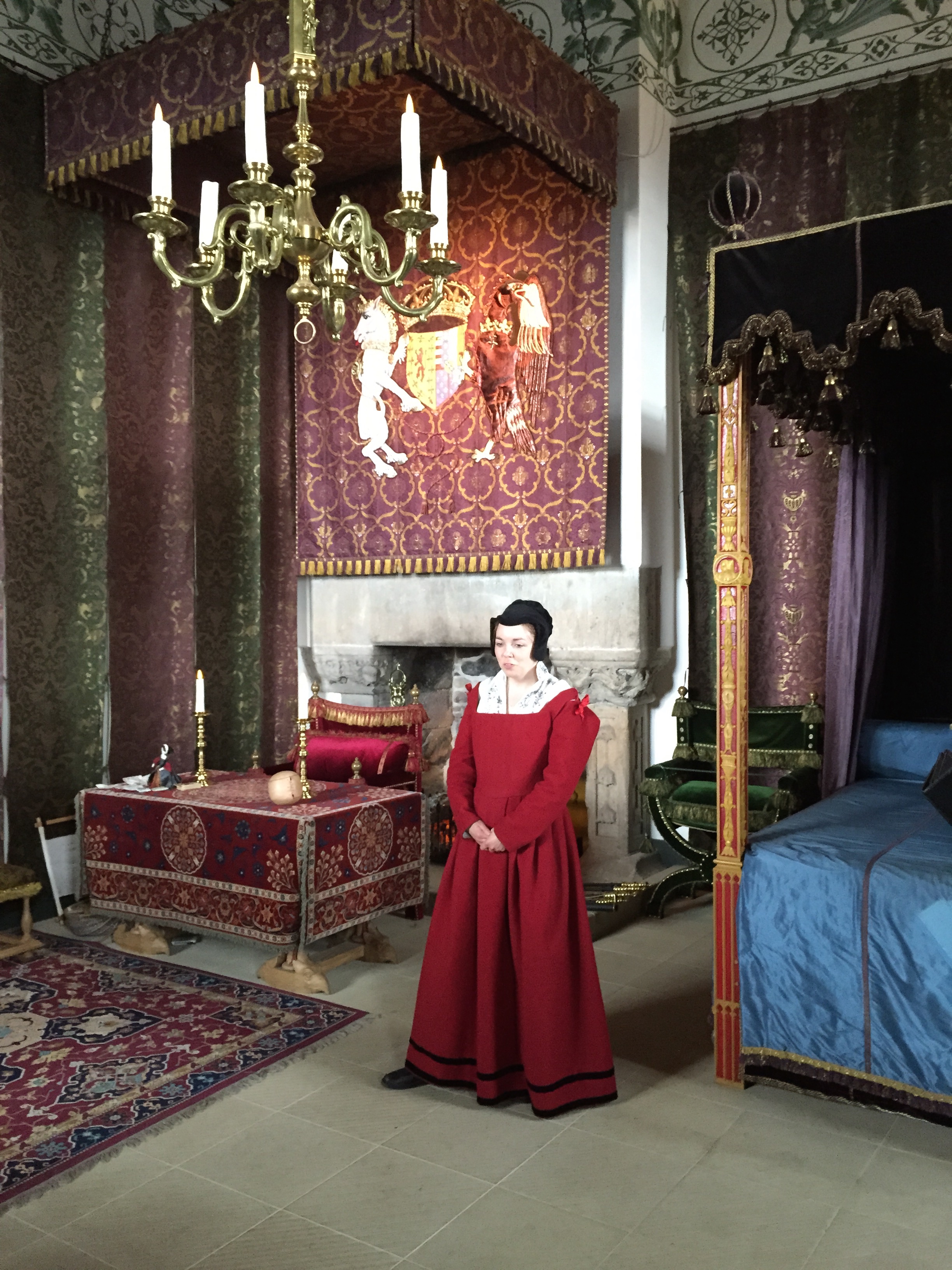
The young woman in the Queen’s chamber room was excellent. She told endless stories of Mary Queen of Scots who lived there as a child and was crowned in Stirling Castle. When only 6 days old, Mary’s father James V died while protecting the Highland Boarders. At 9 months old Mary was crowned queen at Stirling.
The guide in the Queen’s chamber also told us that Mary liked to play football (soccer), and one of the oldest existing footballs was discovered in the Queen’s chamber when they refinished the room a few years ago.
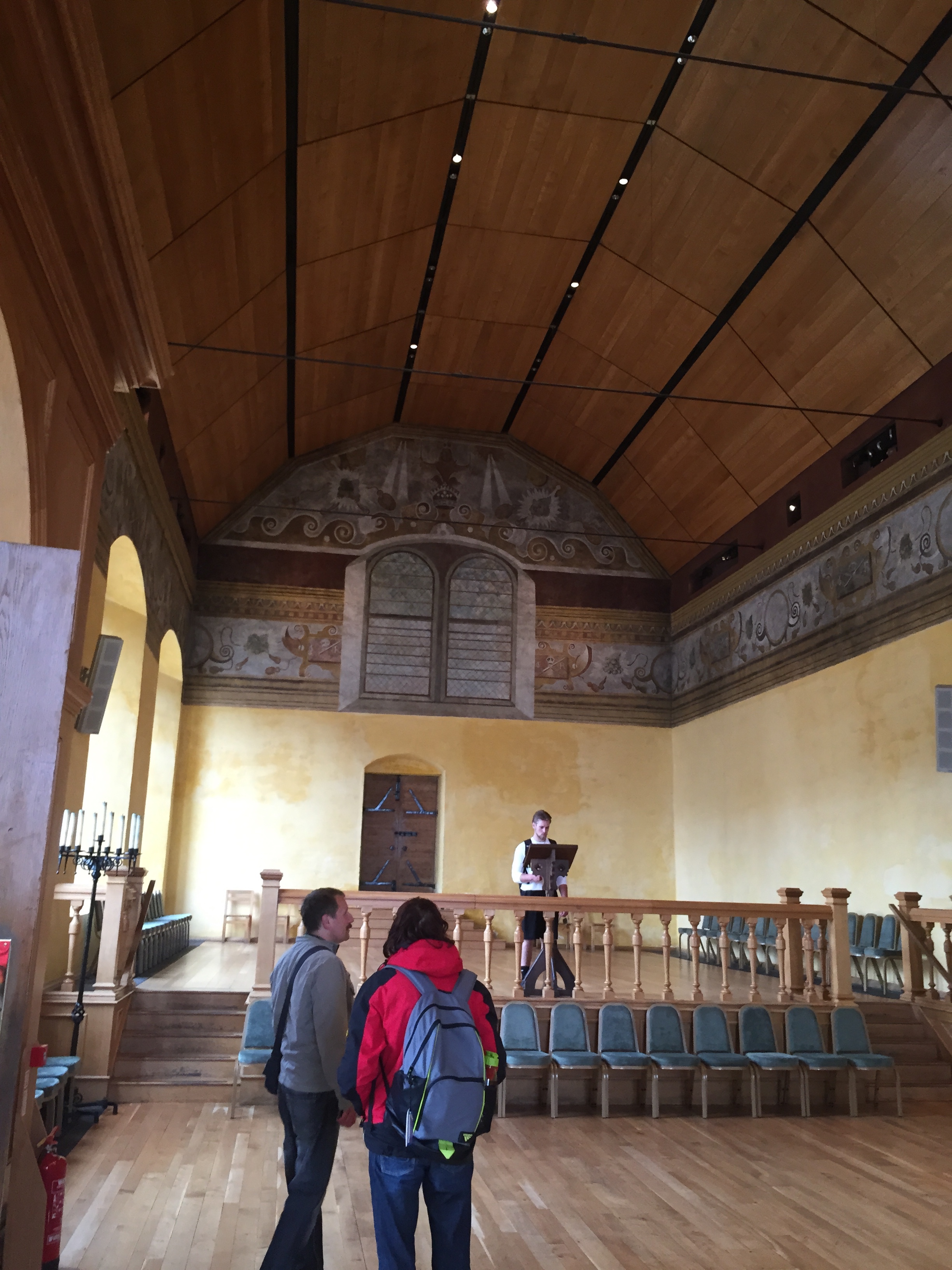
The ceilings in the castle are exquisite. The ceiling in the great hall is a wooden criss cross design.
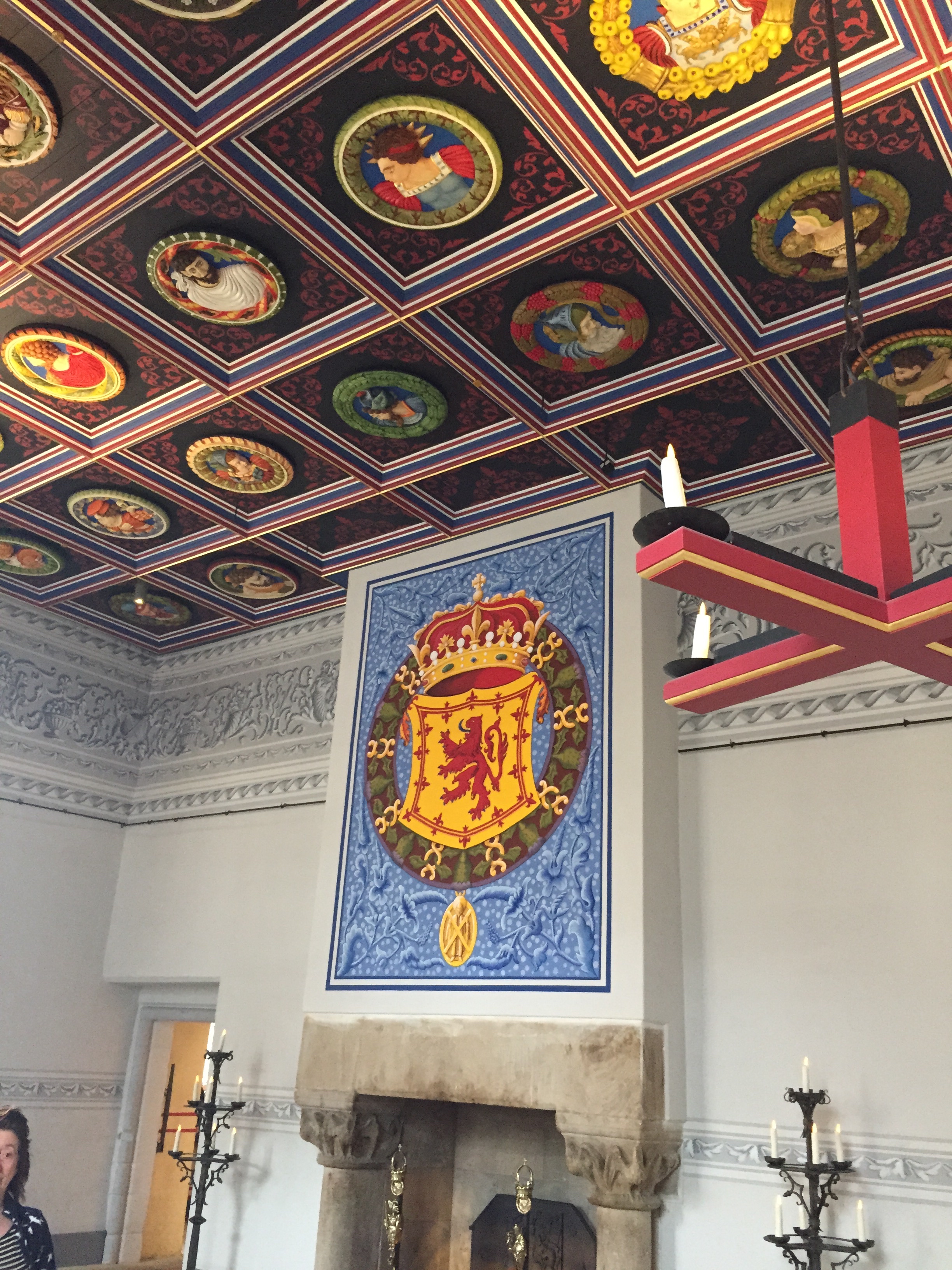
The King’s Presence Chamber has one of the most impressive ceilings I’ve ever seen. The ceiling consists of 38 individually hand carved and painted heads of several historical figures. James V commissioned ceiling as a conversation point with his guests. As such he selected individuals, whom in many cases, selected people only he knew.
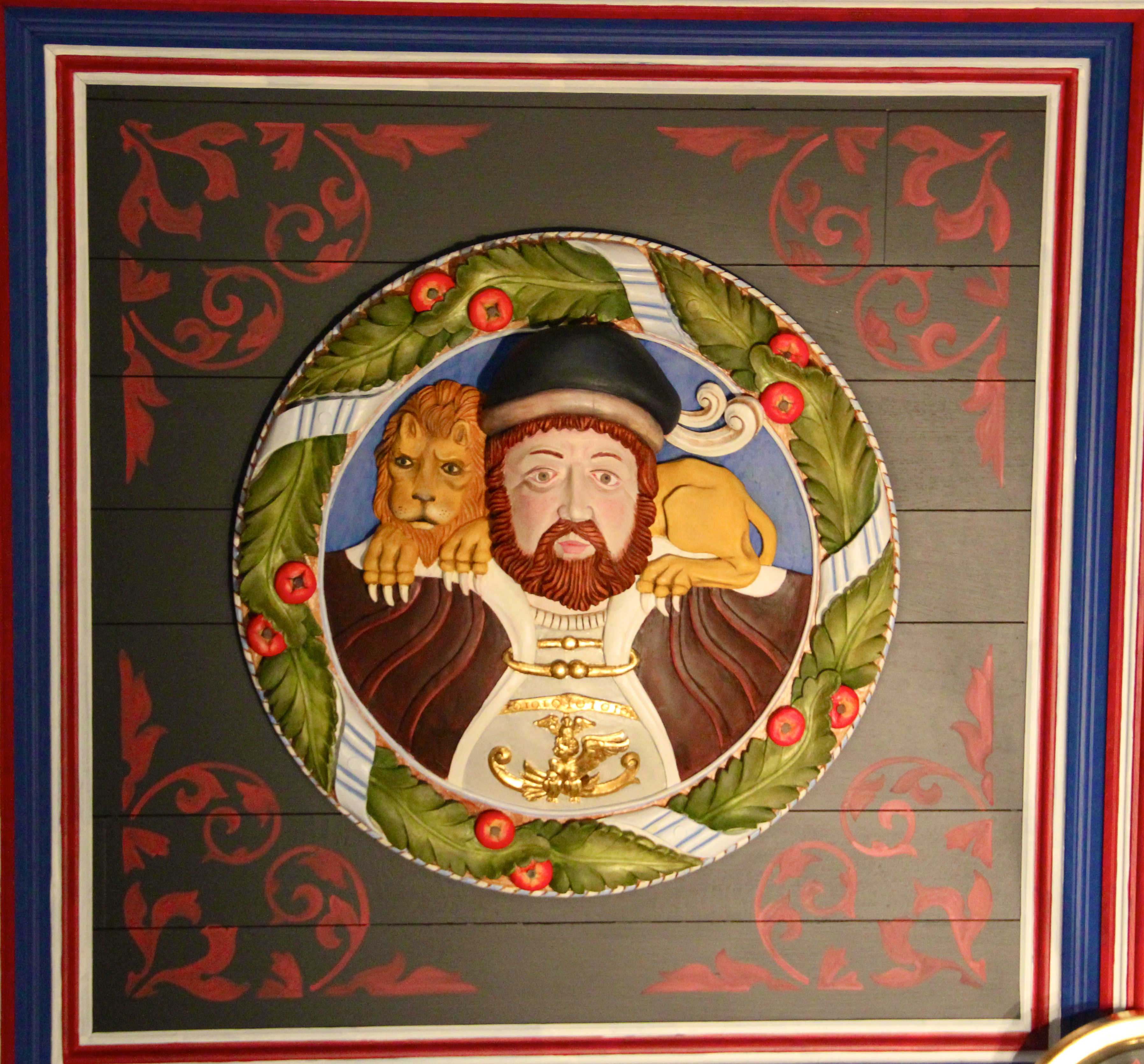
The ceiling is regarded as one of the finest Renaissance architecture in existence. In 1777 the ceiling in the chamber ceiling collapsed and the heads were removed. Only 38 of the original 56 heads survived.

The royal suits in Stirling for several years were closed. In 2011, the King’s Presence Chamber was reopened after an extensive renovation and reconstruction of the ceiling using the remaining surviving “Stirling Heads.”

This looks about my size

Since January 2002, the Tapestry Studio at West Dean College has been working on a recreation of The Hunt of the Unicorn tapestries, 4 of which are now hanging in the restored Queen’s Presence Chamber in the Royal Palace. Historians studying the reign of James IV believe that a similar series of Unicorn tapestries were part of the royal collection.

In the middle of the royal suits is a stone court yard, called the “Lion’s Den.” It was believed that James V was given a lion by his father-in-law, which he kept in this court yard.

They are not sure how long the lion was kept there, but the name the “Lion’s Den” stuck.
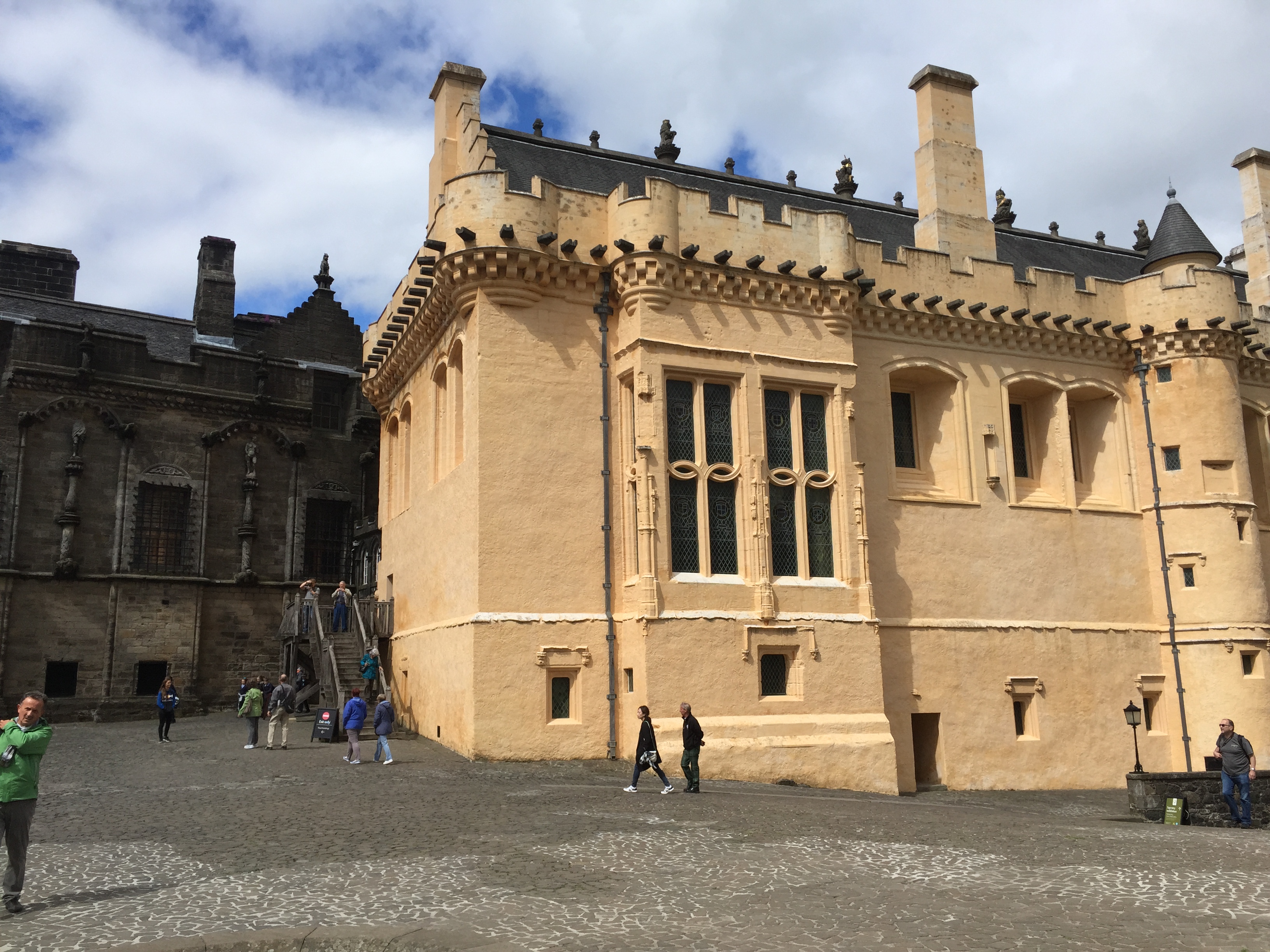
Originally the castle had a limestone look, which made the castle shimmer with a gold like look. During the restoration of the castle, the Great Hall was limewashed to revive its original appearance. Pictures give the building a lighter look, but in person the building is regal looking.

As with Edinburgh Castle, Stirling has its own stories of treachery. A brutal royal murder took place at Stirling Castle.
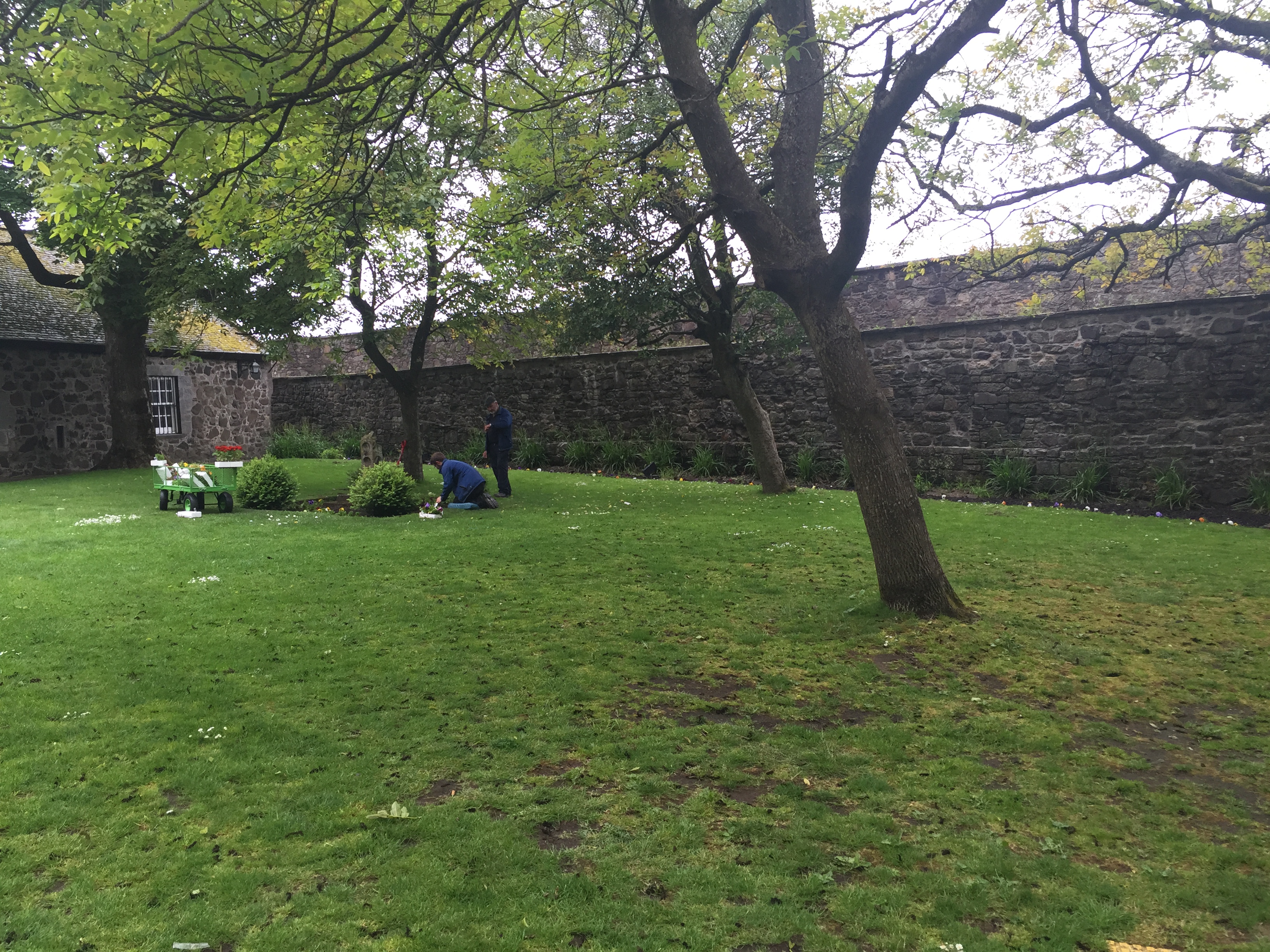
In February 1452. William, 8th Earl of Douglas was assassinated at Stirling Castle by James II and his courtiers. Legend says that he was stabbed 26 times. His corpse is said to have been thrown from a window down into the area now known as the Douglas Gardens.
As you can tell, Tiff and I really enjoyed Stirling Castle. I would definitely go back.
Eglington Castle
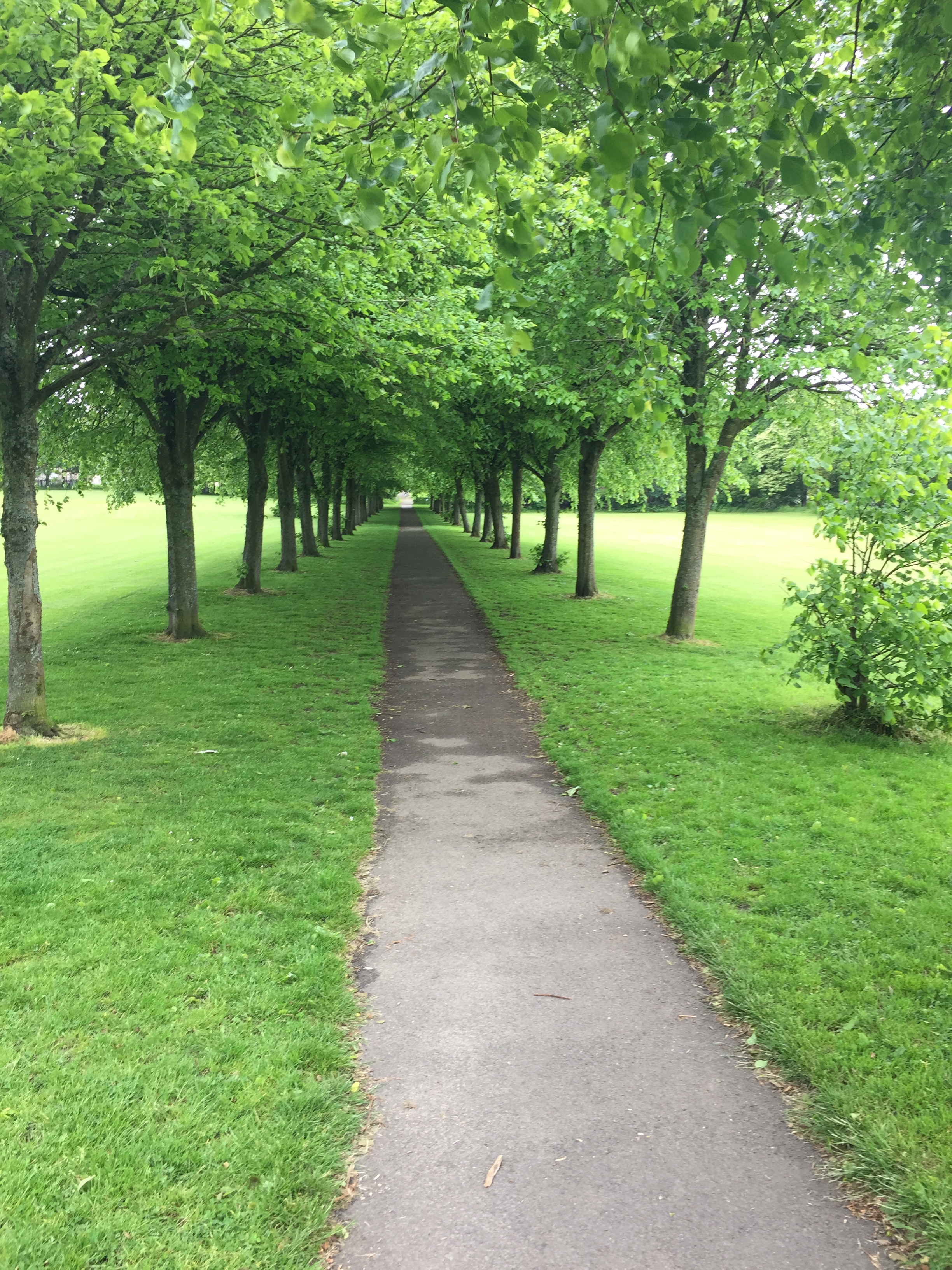
Eglington Castle is located in Eglington Country Park which is in North Aryshire. North Aryshire is southwest of Glasgow. Eglington Country Park is 400 Hectares (1,000) Acres of country side preserved by the county.
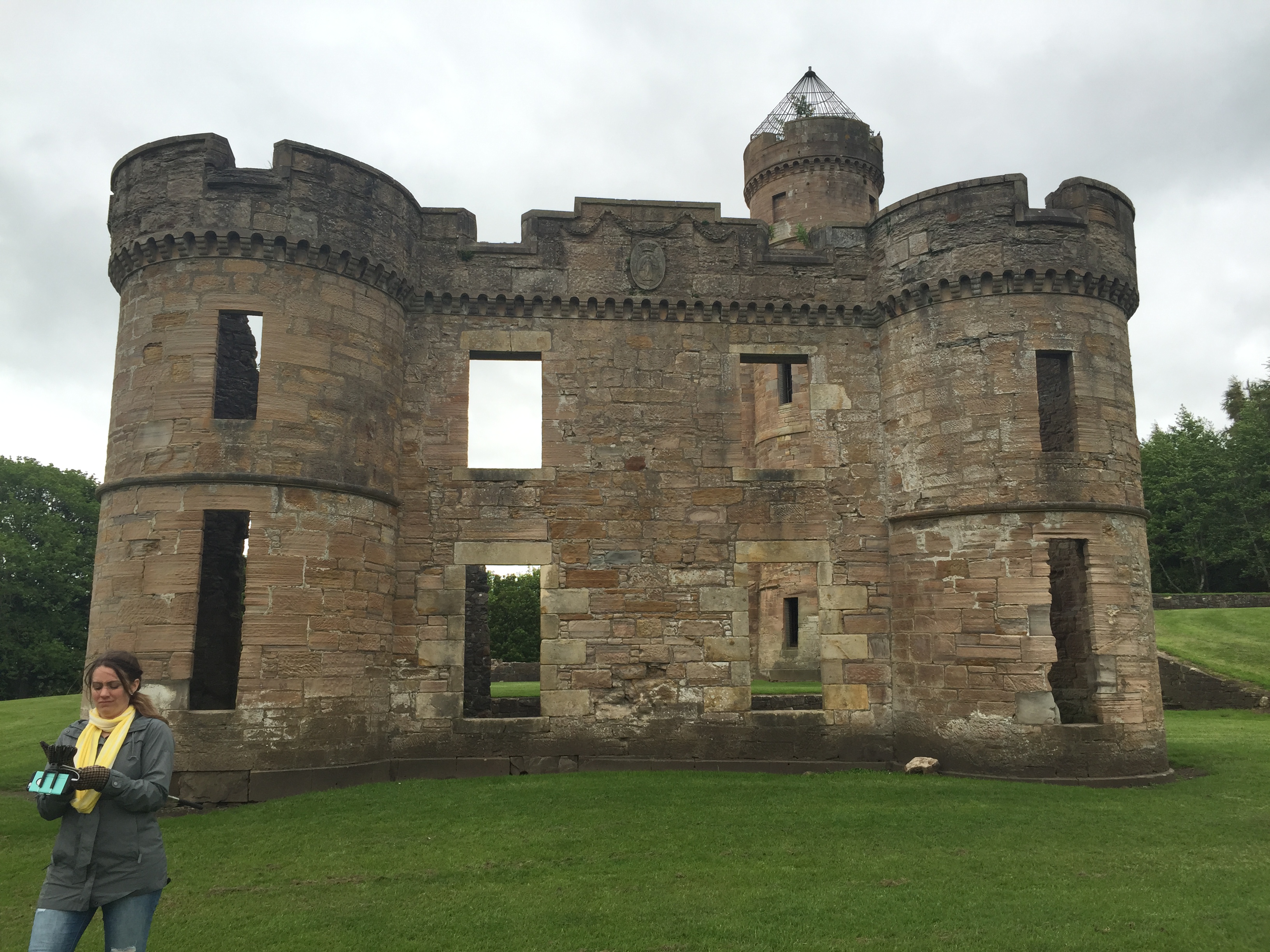
The park has significance to me and my family, because my ancestor, Roger de Montgomerie was awarded the land for being loyal to William the Conqueror, Duke of Normandy after they supported his conquest to become King of England.
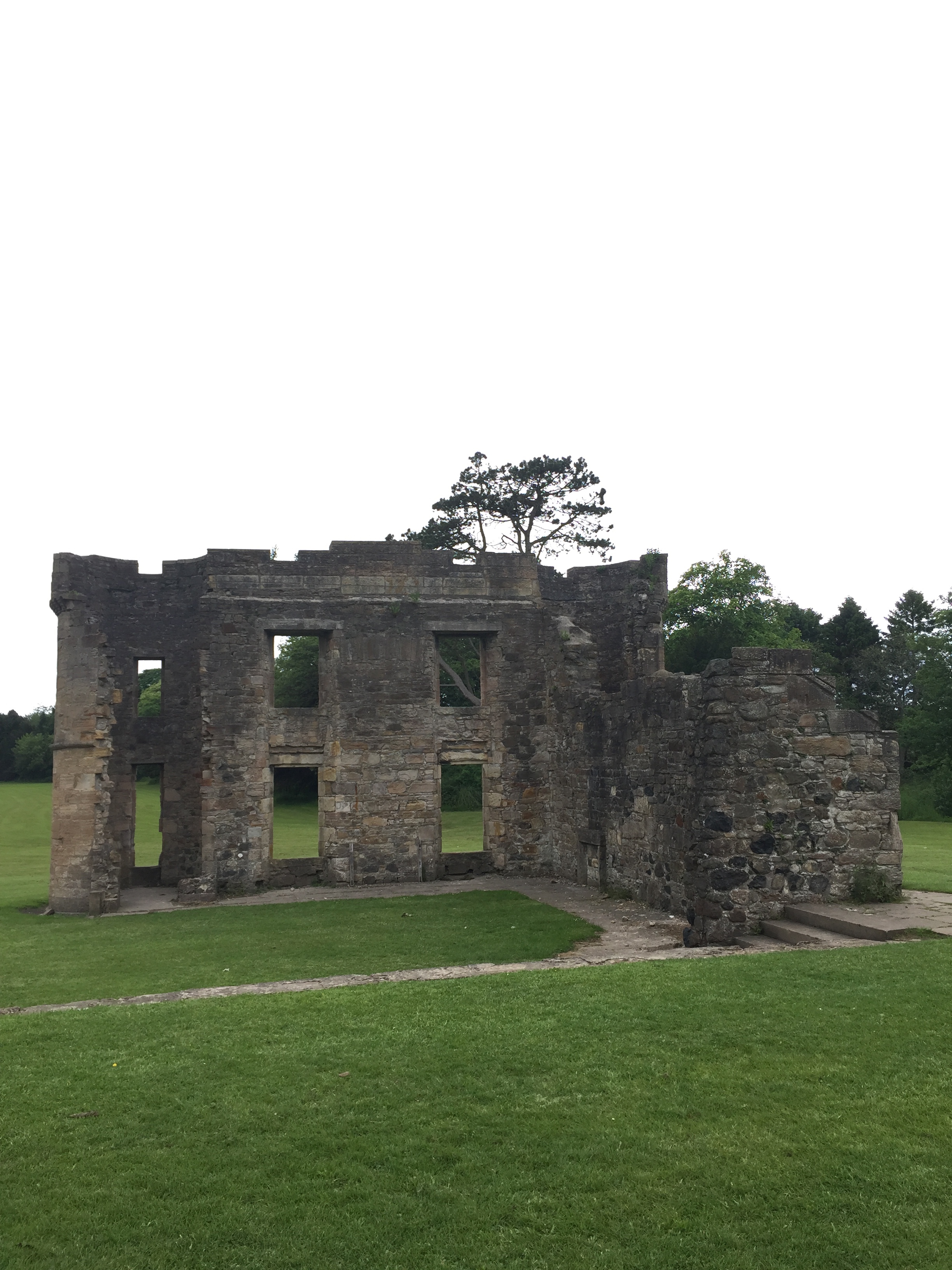 For 500 years my relatives owned and lived on this land. During that time they fought for Scottish Independence with William Wallace and the “Bruce.” The Montomerie or Montgomery clan sided with the Stewart Clan, which included James V, Mary Queen of Scoots, and James VI (aka James I). (Initially the clan went against James I because of his protestant beliefs).
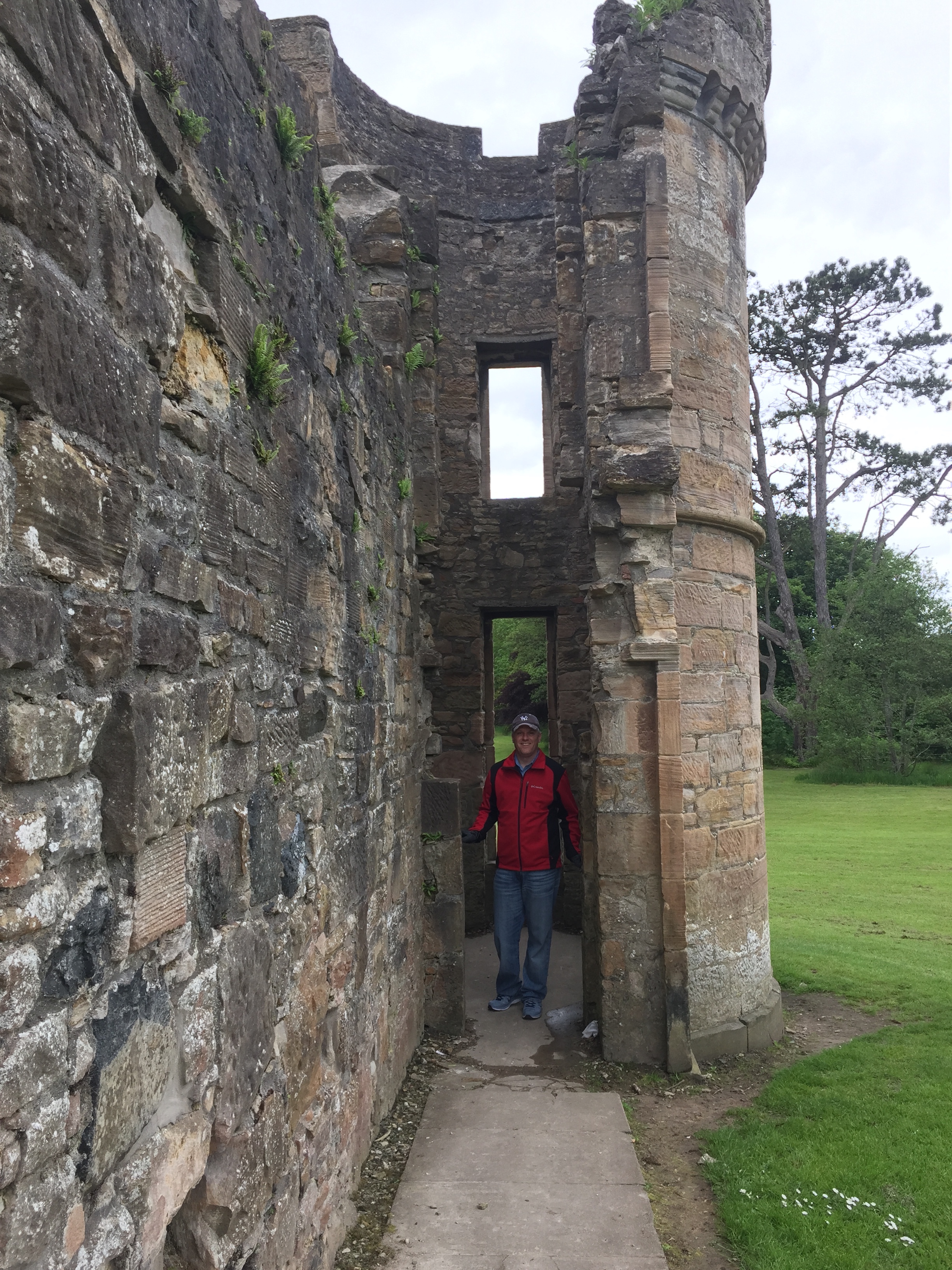 The land is referred to as Eglington. I found that most great houses in England and Scotland have names differing from the family who owned them. In this case the Mongomery’s held the title Duke of Eglington, thus Englington Castle instead of “Montgomery Castle.”
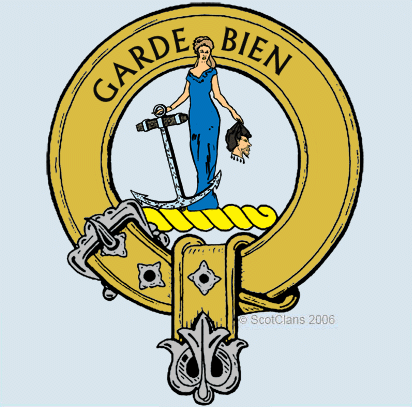
Look closely at castle picture. The Montgomery Clan Crest is in the center of the castle. Clan simply means children. The “chief” merely refers to as the parent.
The crest shows a woman holding a golden anchor in one hand and a severed head in the other. The golden anchor represents “good luck” or a “good life.” The severed head is one of a savage. The phrase “Garde Bien” means “Look Well.” Some may say I take this motto too seriously. Actually, it means Watch Well or Keep a watchful eye.

The most predominant existing feature in the property is the Tournament Bridge. In 1839, The 13th Earl of Eglington held the last medieval tournament in Scotland.

Really it was a reenactment jousting tournament with the winner awarded a sterling silver trophy.
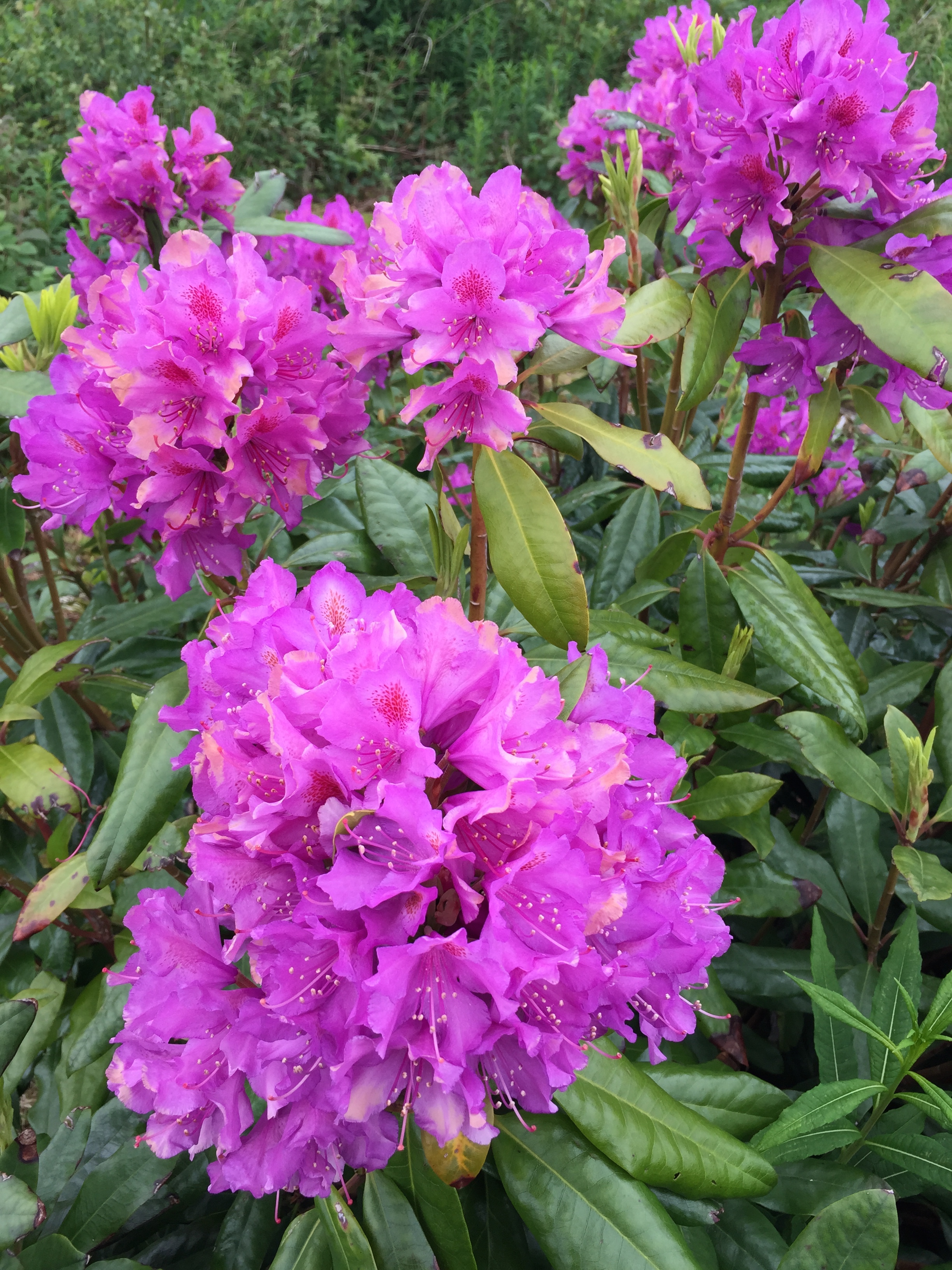 The place around the bridge is very pretty. I could have spent hours wondering the grounds. But we had to get on our way to Liverpool.
 On our way out of the estate we stopped by a park so that Tiff could swing on the huge tire. Really one of the more inventive parks I’ve ever been to. It was a place that I would love to take the children.
Drive to Liverpool/ Preston Temple

Before leaving the area we stopped by Kilwinning, a small village next to Eglington Park. We stopped by the ruins of Kilwinning Abbey. I swear, there is no shortage of hidden gems. Tiff and I would not have to look hard for a scenic spot for pictures. The Abbey grounds were very nice. I particularly liked this photograph.
The drive back to England was as magnificent as the one to Scotland. Simply beautiful. The drive from Glasgow to Liverpool takes about 3 hours. Looking at the map I realized Preston is about 30 minutes outside of Liverpool.

Tiff and I took a detour to stop by and see the LDS temple there. We were too late to go inside but we spent some time wandering the grounds.

I loved the hedges with the red roses in the middle. The contrast between the green and red was striking. I want to figure out which plants they used for the hedge, because I would like to do something similar in my yard.
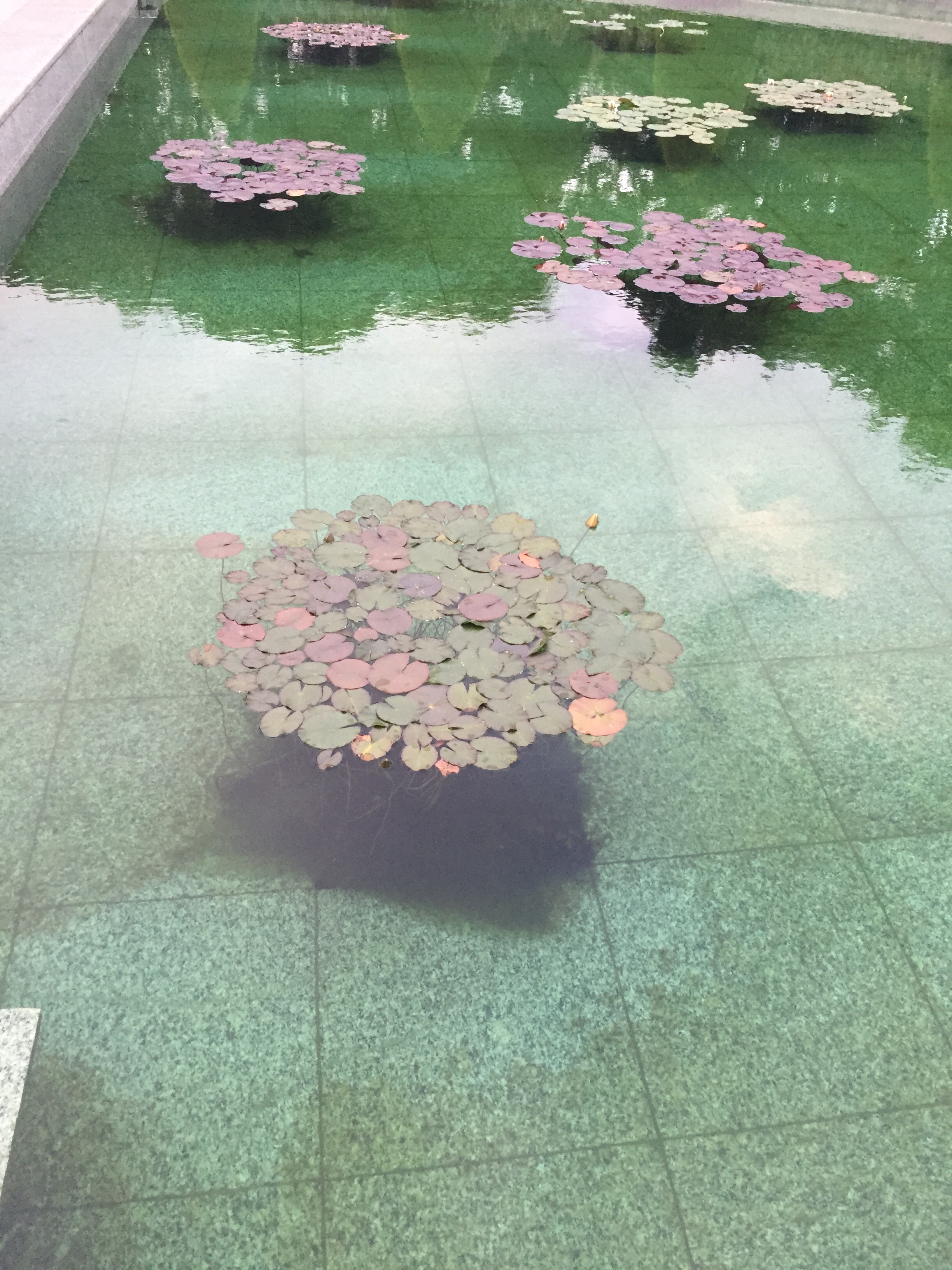 Also, I have never seen such a pretty collection of lily pads in a pool. Tiff and I also realized on our way out that the Missionary Training Center for the United Kingdom and Ireland is in Preston. We could see the missionaries in class as we drove away.


 Christiansen Travel