City Hotel – Edinburgh
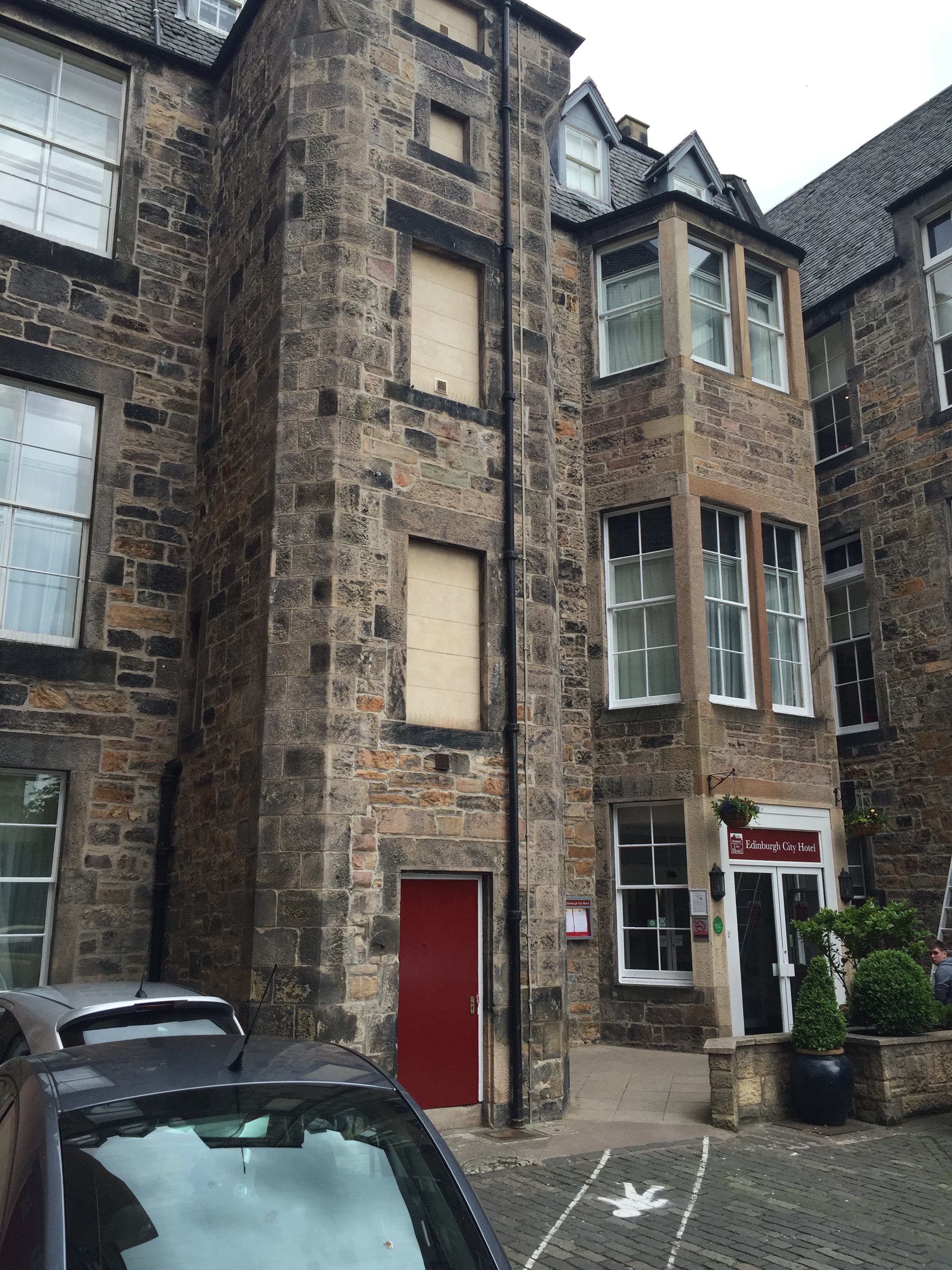
In deciding where to stay for this trip, I tried to select hotels based upon convenience or historical significance. In Edinburgh I chose both. The City Hotel in Edinburgh is now located in a former maternity hospital. The hospital has some significance in that James Young Simpson, used the anesthetic qualities of chloroform on a human, two guests at his dinner party. This was done as an entertainment and not as a medical procedure. This was followed, three days later, by the first use of chloroform on an actual patient, for a dental procedure, by Francis Brodie Imlach (1819-1891), also in Edinburgh.
Edinburgh Castle
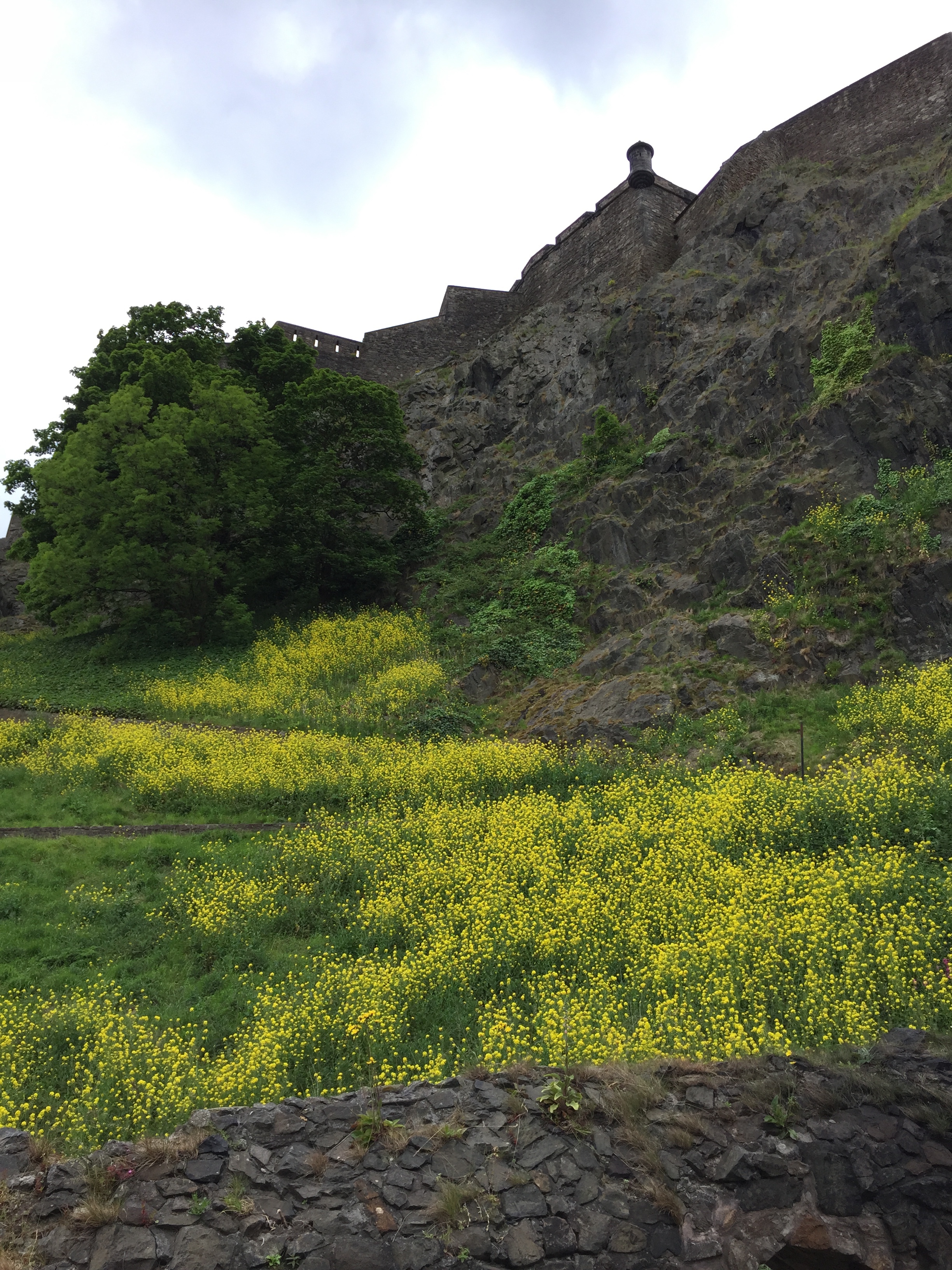
From the hotel we walked the short 1 mile to the castle. About 5 minutes into the walk we turned into a path in a park which led us straight into Edinburgh. The walk was gorgeous. The hillside was covered with yellow wild flowers. The contrast between the yellow and green was quite striking. The picture to the side does not do the scene justice. It was pretty magnificent. If you look closely you will see part of the castle atop the hill.

We could have taken the winding paths straight into the castle, but the castle is in preparation for the annual Military Tattoo. I saw the signs about the road being blocked because of the tattoo stands. I initially thought, “why would anyone put a tattoo stand at the mouth of Edinburgh Castle?” I discovered my ignorance shortly thereafter. In August each year, the United Kingdom military units present a performance of their guard, called a Military Tattoo. I wish we were going to be here for it.
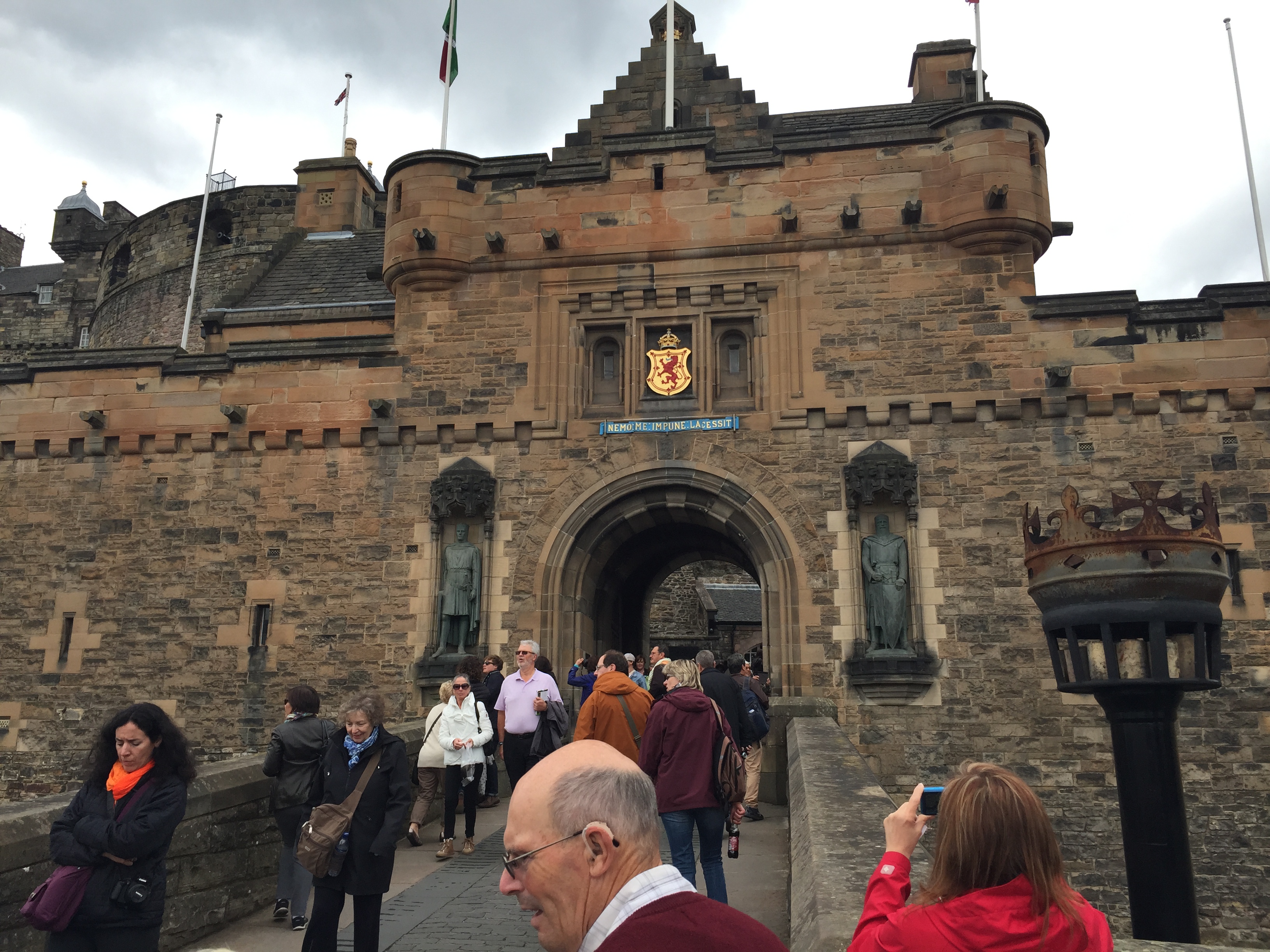
The Castle itself is pretty grand. See the coat of arms above the gate, that is the Royal Standard of Scotland. The Standard has been used since David I of Scotland (my direct forefather on the West’s side). The standard is only flown as a flag in a few select places including Edinburgh Castle and Holyroodhouse Palace (the Queen’s residence in Scotland) only when the sovereign (in this case the Queen) is not in the country. When she is in Scotland the English flag is flown.

Six ancient cannons guard the walls of Edinburgh castle. They exist where a mighty tower once stood but which was blown down during a siege. The remnants of the tower still exist, including the area where the “Black Dinner” occurred. In 1440, King James II, the only son of James I (Not to be confused with James VI who became James I of England) reigned over Scotland.
His primary rivals included the the Earl of Douglas. Under the pretext of reconciliation, King James II invited The Earl and his brother to Edinburgh castle for dinner. After a grand fees a tray with a Bull’s head was brought in and placed on the table. The Bull head in Scotland represents the idea that someone would be executed soon. Upon the exposure of the Bull’s head someone accused the Earl and his brother from conspiring against the king. They were then summarily taken out to the castle hill, tried and executed.
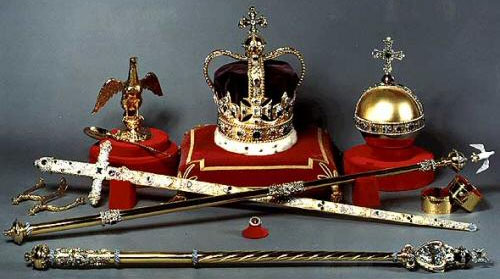
Also contained in the castle are the Scottish Crown Jewels. Significantly smaller than the English Crown Jewels, the jewels themselves were concealed for a long period of time. The jewels were created in 1540 with King James the IV and contain a sword, scepter, and several crowns.
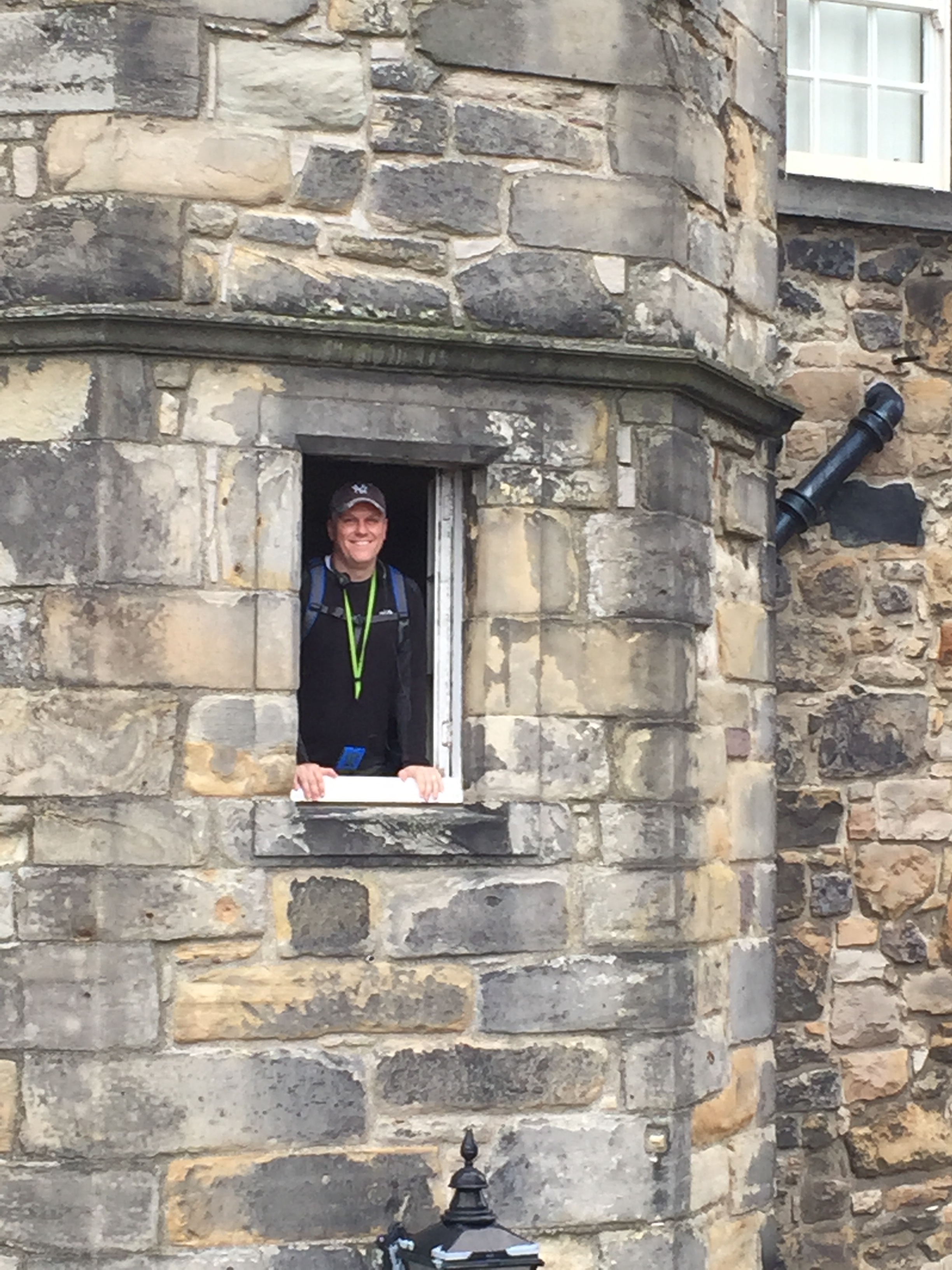
In 1707 when the Union of the Crowns act was passed, united the Kingdom of Scotland and the Kingdom of England together to form the Kingdom of Great Britain. The “Honours of Scotland” were placed in a chest and hidden in the castle. The jewels remained there until Sir. Walter Scott found the chest in 1818. During World War II, the Honours were again hidden under the fear that the Germans would invade and take them.
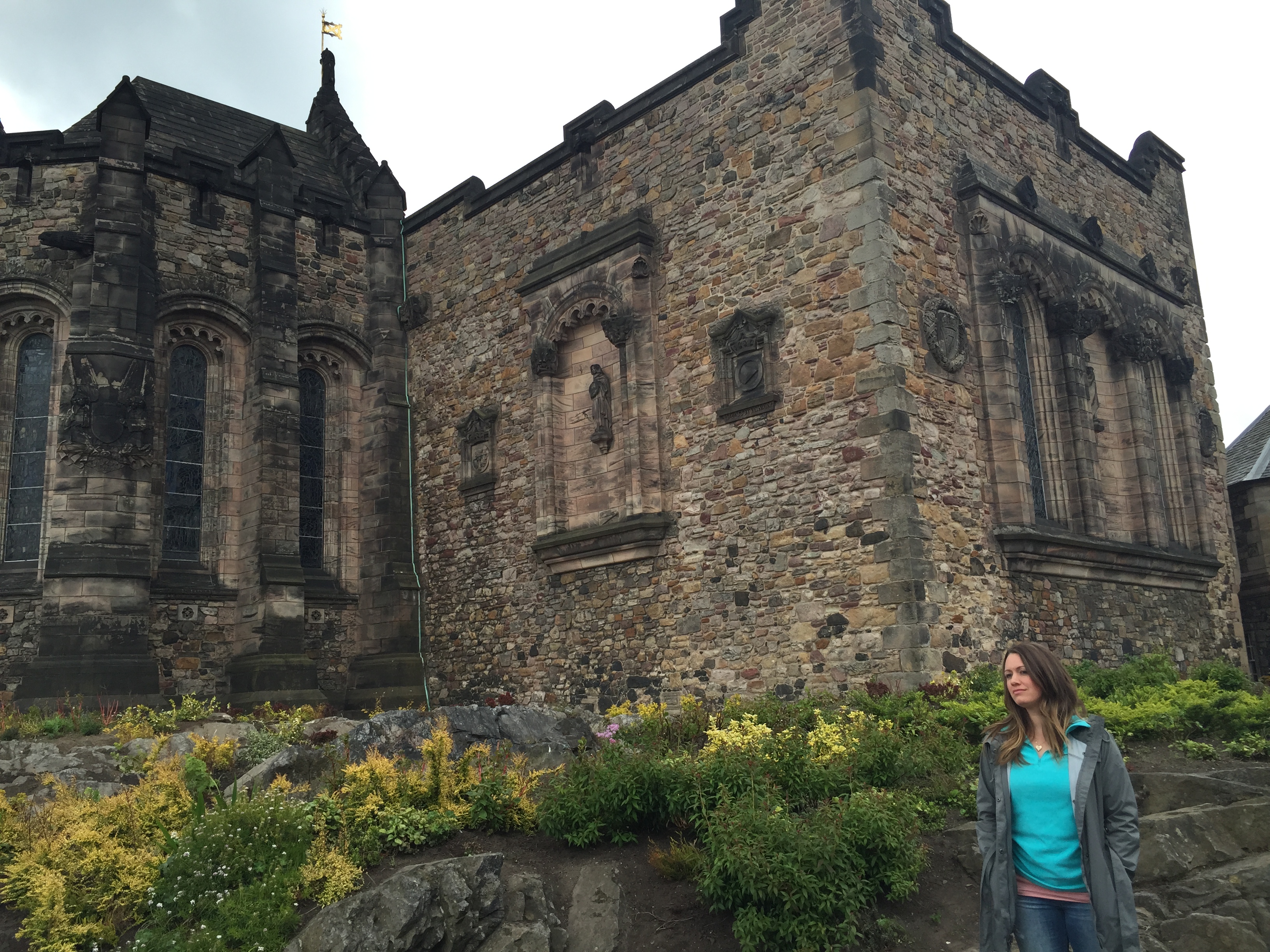
The castle is situated on a huge hillside. You would think it was impregnable. The castle, however, was sieged and taken on several occasions.

The castle is now partially used as a garrison for the Scottish Military. It has an extensive military museum with uniforms of soldiers from the past four hundred years.


The main state rooms of the castle were quite simple compared to Windsor castle. There is a lot told about Mary Queen of Scots who spent much of her life in exile or in captivity. She spent much of her “free” time in the castle, where her son James VI (James I) was born.
We found a funny children’s book entitled “Avoid being Mary Queen of Scots.” We enjoyed going through the book.
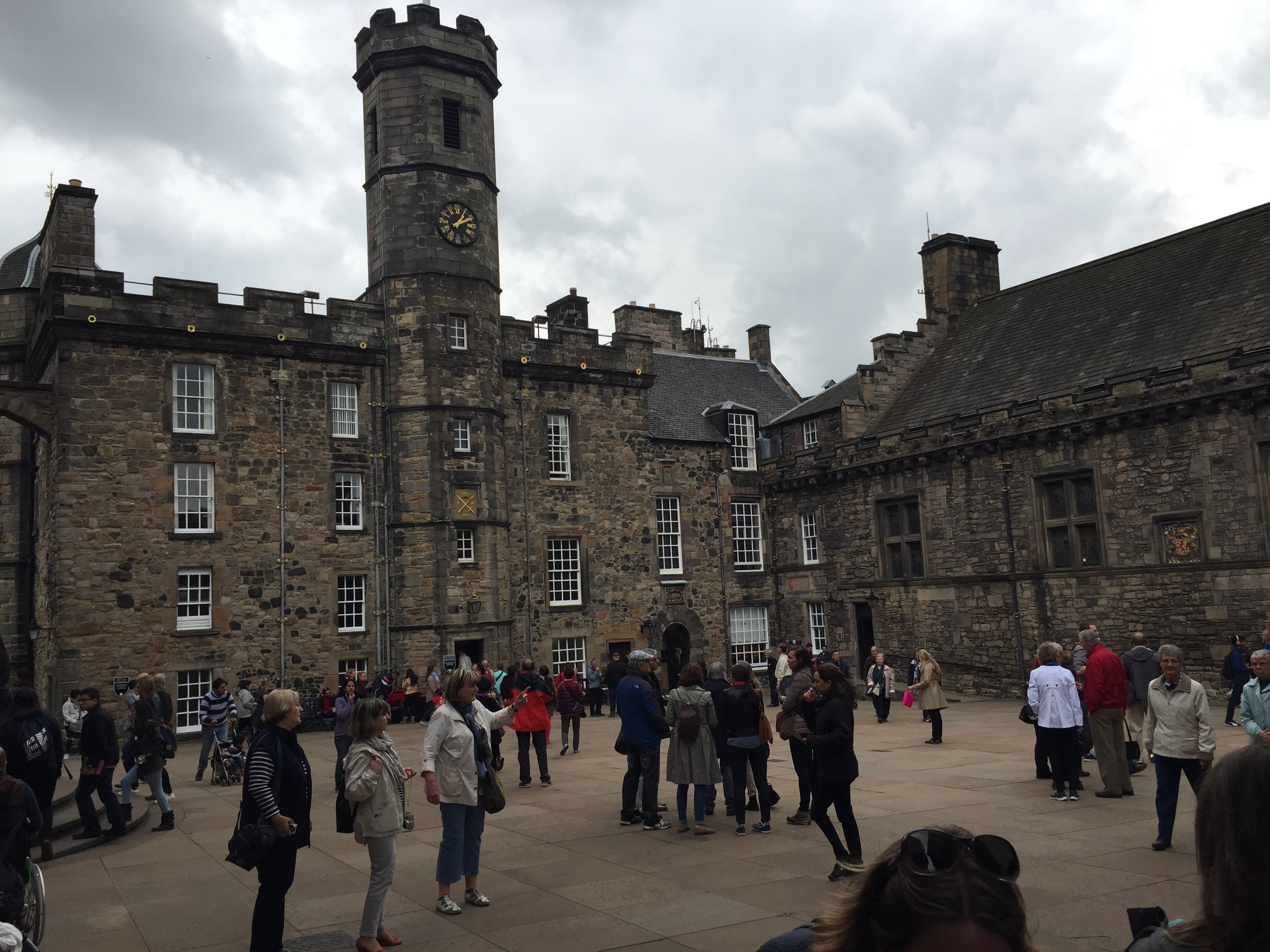
The “Royal Mile”
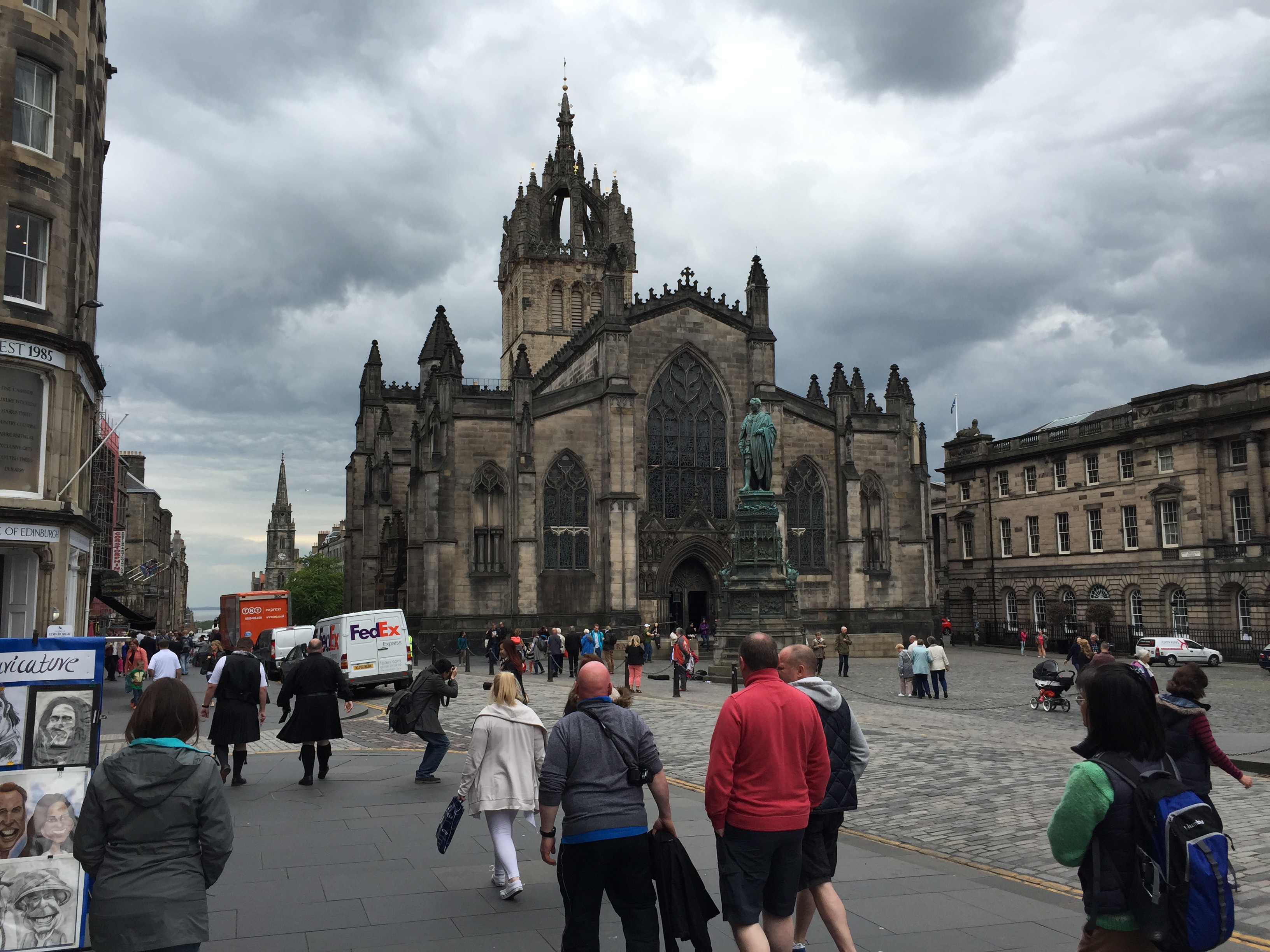
From the Castle we walked down the “Royal Mile” which is a mile worth of shops, restaurants, cathedrals, and exhibits which lead to Holyroodhouse Palace.

We spent several hours walking though various shops and pubs. Tiff even tried to pick up a bagpiper. Shameless!
Real Mary King’s Close
While on the Royal Mile we went through the Real Mary King’s Close. Edinburgh is an old city. The current city, and the Royal Mile is built on top of the old city buildings they call the “Undercroft.” Over the past few centuries most of the undercroft was sealed up. But the recent trend is to open them up, as is the case with the Real Mary King’s Close.
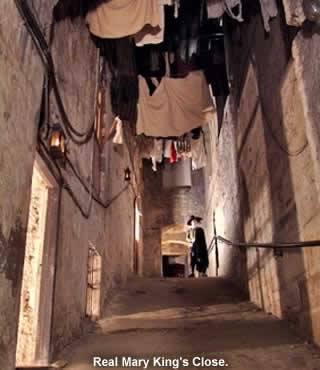
A “Close” is the Scottish name for court yard or street. These streets were no more than 10 feet wide.
As you can see by the picture of the Real Mary King’s Close, its not very wide. The bottom houses were where the poor lived. The rooms are very crude with only one main room. The buildings were as high as 8 stories high, with the wealthier classes living on the higher levels. Sanitation was out the window, literally. In the 1200s, residents of the close would fill their bed pots and “chuck” (throw) them out the window onto the street after yelling “watch out below.” The lovely sewage then would flow down the street, into the lower dwellings and then eventually end up in the city’s water supply. Additionally, very little sun light made it down to the bottom of the close. So if you had to walk up and down the street, you were walking in sewage in the dark.

No wonder when the “Black Plague” hit it almost completely wiped out the city. Two types of plagues would hit: Bubonic and Pneumonic. Bubonic plague was partially treatable with a 50 percent mortality rate if cared for properly. Proper caring included popping huge boils, cleaning them, and immediately searing them closed. No pain medicines, quite painful especially since the boils generally occurred in your armpits and groin.
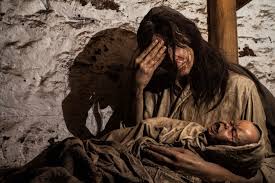
Pneumonic plague was untreatable. Your organs basically started to shut down from the inside and you would vomit until your bowels burst. Death followed within a week of contracting the illness. They estimate 80 to 200 million Europeans died of the Black Death. We heard multiple stories of children being bricked up into their homes after discovering they had Pneumonic Plague.

The following picture is an example of one such story. A few years ago, a Medium visited the Close and claimed to see a little girl’s ghost who claimed to have been bricked up in the room upon contracting the “Black Death.” The Medium immediately went out and purchased a doll and placed it in the room. She claimed that the child was very happy to receive the toy. Since then visitors have left small items for the little girl.
I had really bad dreams about visiting the close that night. Really spooky, and there were several stories just like this that they shared.
Kyloe Restaurant & Grill
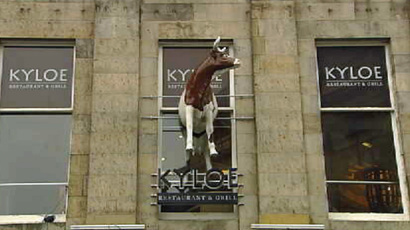
We finished the night by walking back through the park and eating at Kyloe Restaurant & Grill. This is a steakhouse in Edinburgh, it was fantastic. The filet was perfect, and the “Mess on Eton” (Fresh Strawberries, ice cream, whipped cream, and meringue chips) was fantastic.
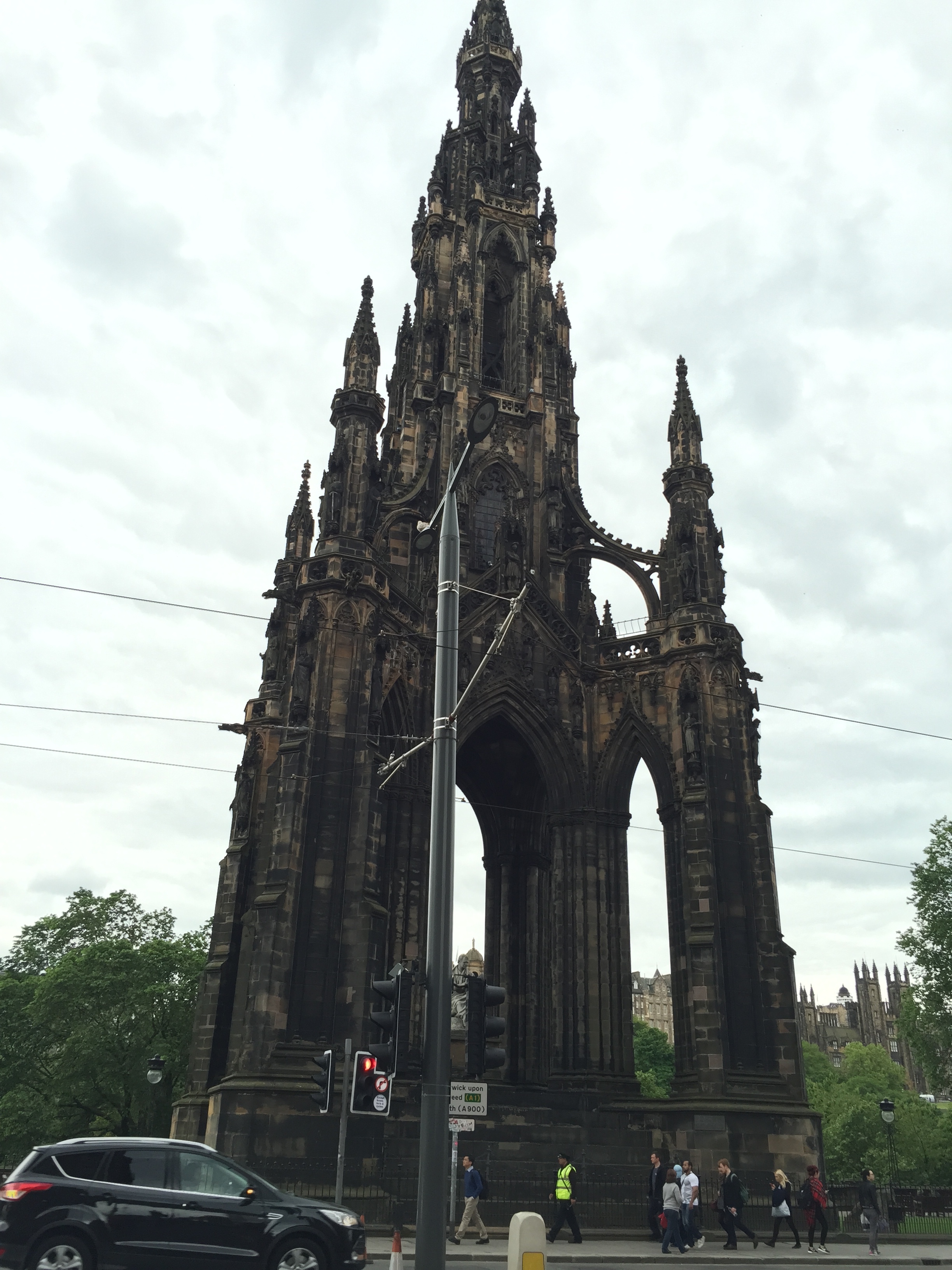
On the way back to the hotel we passed the Sir Walter Scott (author of Ivanhoe, Rob Roy, and the Lady of the Lake) Memorial. The picture does not do it justice. The Victorian Gothic memorial began after the author’s death in 1832, and is the largest monument dedicated to a writer in the world.
As you can tell Day 8 was really busy.

 Christiansen Travel